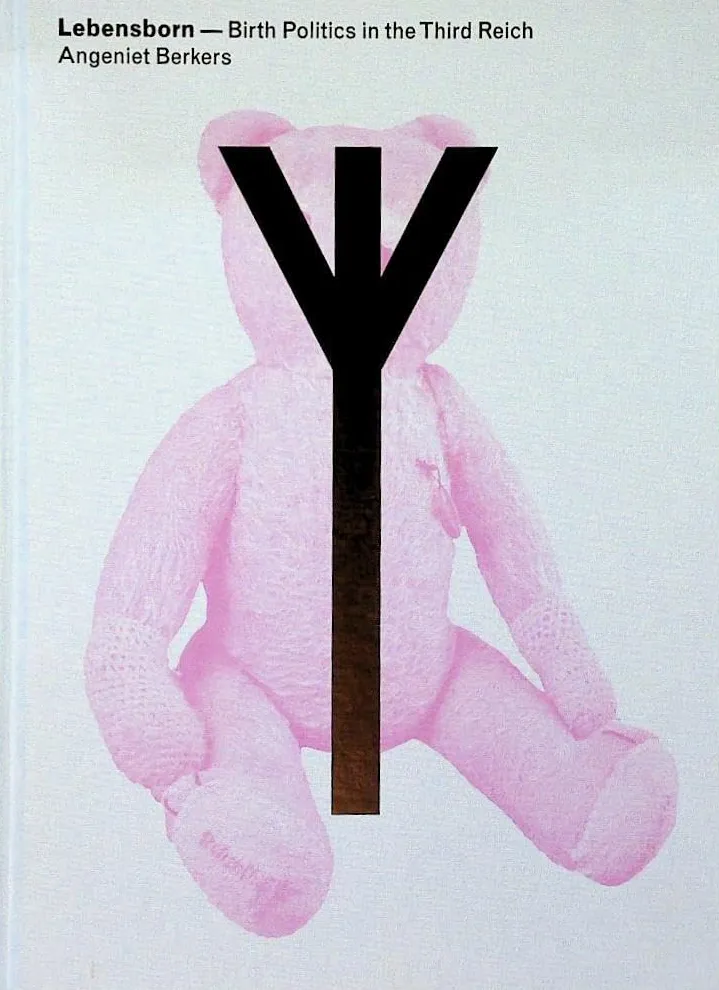
Lebensborn – Birth Politics in the Third Reich
- Publisher
- The Eriskay Connection
- Year
- 2024
- ISBN
- 9789083357164
- Specifications
- Hardcover
Size: 208 x 288 mm
Pages: 272
Language: English
Research, photography and text: Angeniet Berkers
Essay: Dr Ingvill Constanze Ødegaard
Translations: Vicky Morrison Honey Jones-Hughes
Advice: Dorothee Schmitz-Köster Dr Ingvill Constanze Ødegaard
Design by: Rob van Hoesel
Cartography: Carel Fransen
Retouching: Loek van Vliet Luuk van Raamsdonk
Lithography by: Sebastiaan Hanekroot (Colour&Books)
Production by: Jos Morree (Fine Books)
Printed and bound by: Wilco Art Books (NL)
Print run: 1000 copies
On December 12th 1935, a programme was initiated in Germany to provide the Third Reich with the new generation of leaders and future elite for their 1000-year empire: Lebensborn (Source of Life). The birth rate in Germany fell dramatically after World War I, and the Nazis tried to reverse the trend by all possible means. All Germans were called upon to have more children, with the slogan “Give the Führer a child”. Abortion was banned, contraceptives suppressed, and incentives and tax breaks devised for families with children. SS officers were encouraged to procreate as much as possible, including out of wedlock. In this setting, the Lebensborn had a special task: to increase the number of so-called ‘Aryan’ offspring. In several Lebensborn homes spread across Germany and Austria, Norway, Belgium, and France (married or unmarried) women could give birth to their children if they met the requirements of the Aryan race.
The architect behind this plan, Heinrich Himmler, aimed to improve the ‘racial quality’ in the new empire to be built on a National Socialist basis with these blue-eyed, blonde-haired, and light-skinned children. When it turned out the program wasn’t effective enough, thousands of children were kidnapped from Eastern Europe and taken to Germany to be ‘Germanised’.
After the war, the children from these homes and families were often stigmatised and sometimes even mistreated or abused. Many grew up with secrets. Angeniet Berkers (NL) documented the stories of nine individuals who are now in their 70s and 80s. In her archive research, she found objects and many documents that show how nationalist ideas permeated the nurseries in an eerily organised way. Lebensborn tells the compelling story of this particular history, focusing on the major events, but especially on the personal consequences for those involved.
With an essay by Dr Ingvill Constanze Ødegaard.